Perioperative anaphylaxis — grading and immediate management
Anaphylaxis · Anaesthesia & Perioperative
Physician-written · Verified by three sets of doctors · Reviewed November 2026
Bedside summary
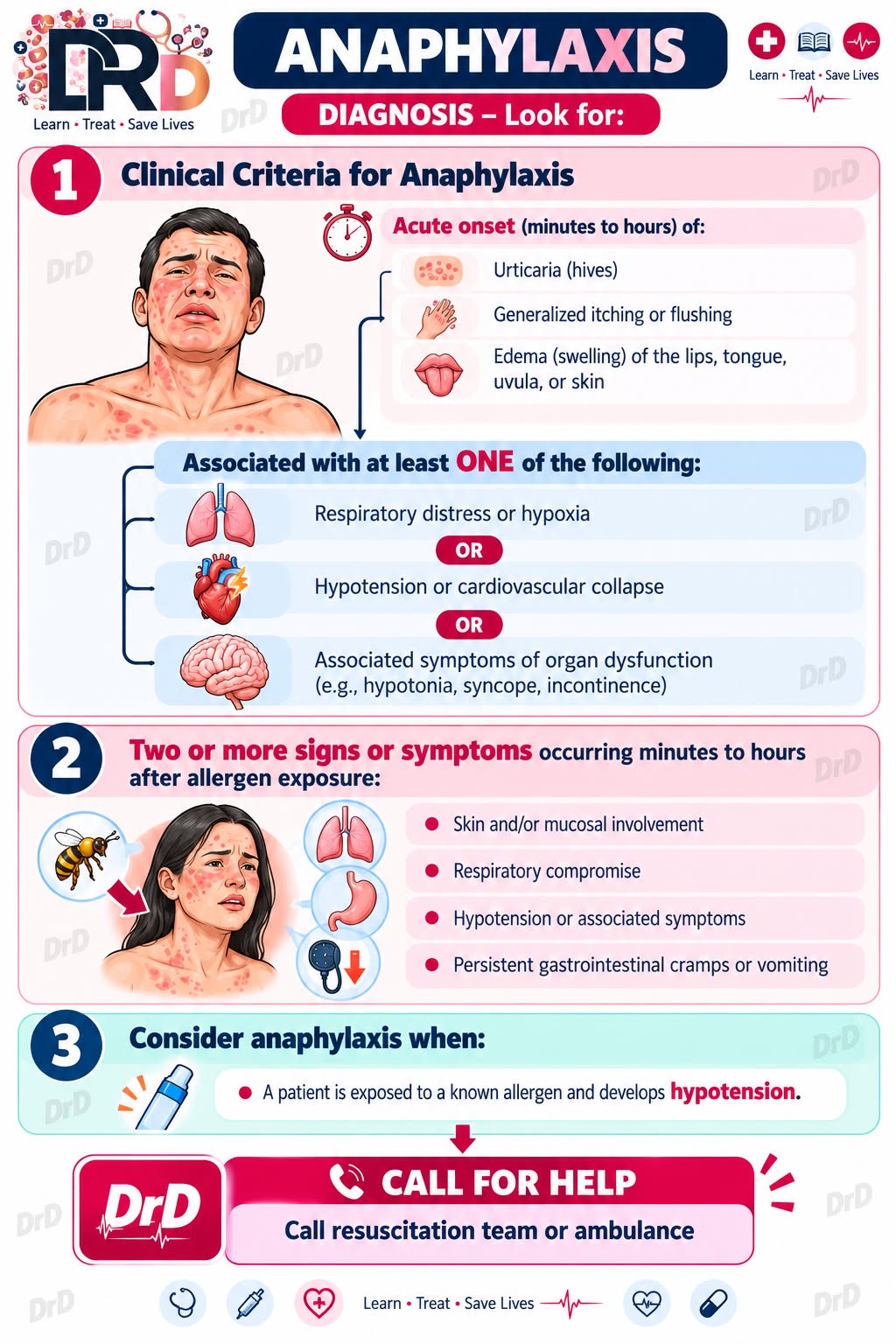
Life-threatening IgE or non-IgE reactions during anaesthesia (commonly to neuromuscular blockers, antibiotics, chlorhexidine or latex) cause bronchospasm, cardiovascular collapse and rash. Early adrenaline and fluids are life-saving.
Figures & algorithms
Assessment
Investigations
- Capnography, airway pressure and SpO2 (bronchospasm)
- Blood pressure and heart rate (collapse)
- Inspect skin for flushing/urticaria
- Serial mast cell tryptase (immediate, 1-2 h, >24 h baseline)
- Grade severity (Ring and Messmer I-IV)
Management
- Stop the likely trigger and call for help
- Give 100 percent oxygen and secure the airway
- Give intravenous adrenaline in titrated boluses, escalating to an infusion
- Give a rapid crystalloid fluid bolus
- Treat refractory bronchospasm and hypotension
- Consider adjuncts after resuscitation
- Take timed tryptase samples and refer to an allergy clinic
Drugs & doses
Adrenaline: 50 mcg IV boluses (0.5 mL of 1:10000), escalate; IM 500 mcg if no IV access
Crystalloid: 20 mL/kg rapidly, repeat as needed
Adjuncts: hydrocortisone 200 mg IV, chlorphenamine 10 mg IV; salbutamol/glucagon if refractory
Disposition
ICU/HDU; mandatory allergy referral.
Adrenaline and fluid are first-line; antihistamines and steroids are secondary. Investigate every grade III-IV reaction with timed tryptase and allergy testing (NAP6 / Assoc of Anaesthetists).
Disclaimer: Educational decision support for qualified clinicians and students — not a substitute for clinical judgement, local protocols or a full drug reference. Confirm every dose and contraindication against your formulary before prescribing.