Anaesthesia for pyloric stenosis
Pyloric stenosis · Anaesthesia & Perioperative
Physician-written · Verified by three sets of doctors · Reviewed November 2026
Bedside summary
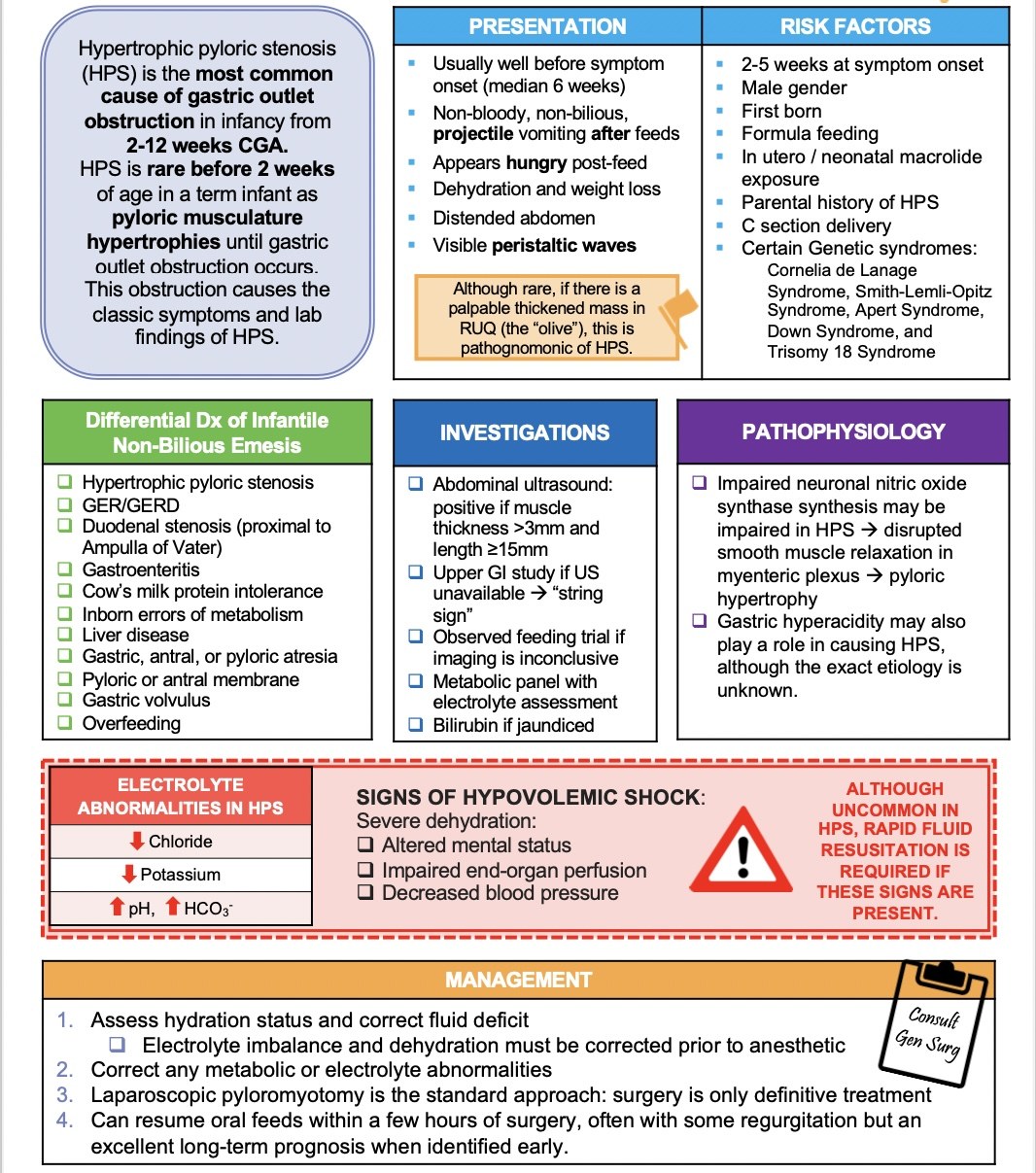
Infantile hypertrophic pyloric stenosis causes projectile vomiting with a hypochloraemic, hypokalaemic metabolic alkalosis. It is a medical, not a surgical, emergency: the metabolic and fluid derangement must be corrected before anaesthesia, which then focuses on a full stomach and apnoea risk.
Figures & algorithms
Assessment
Investigations
- Electrolytes and blood gas (hypochloraemic hypokalaemic metabolic alkalosis), glucose
- Weight, hydration status, urine chloride
- Ultrasound confirming the diagnosis
Management
- Resuscitate and correct fluid and electrolyte deficits first; do not rush to theatre
- Aim for chloride >100 mmol/L, bicarbonate <28-30 mmol/L and normal potassium before surgery
- Empty the stomach via a wide-bore nasogastric tube before induction
- Perform a careful induction treating the stomach as full; secure the airway
- Avoid long-acting opioids; use short-acting agents and local/regional infiltration for analgesia
- Monitor glucose and temperature throughout in the infant
- Extubate awake and observe for postoperative apnoea and hypoglycaemia
Drugs & doses
Correct deficit with 0.9% saline + potassium; dextrose-containing maintenance
Aspirate stomach via nasogastric tube pre-induction
Short-acting agents; local wound infiltration/caudal; paracetamol 15 mg/kg
Avoid long-acting opioids to limit postoperative apnoea
Disposition
Paediatric ward/HDU with apnoea and glucose monitoring.
Correct the hypochloraemic hypokalaemic alkalosis before theatre; it is a medical emergency, and alkalosis predisposes to postoperative apnoea.
Disclaimer: Educational decision support for qualified clinicians and students — not a substitute for clinical judgement, local protocols or a full drug reference. Confirm every dose and contraindication against your formulary before prescribing.